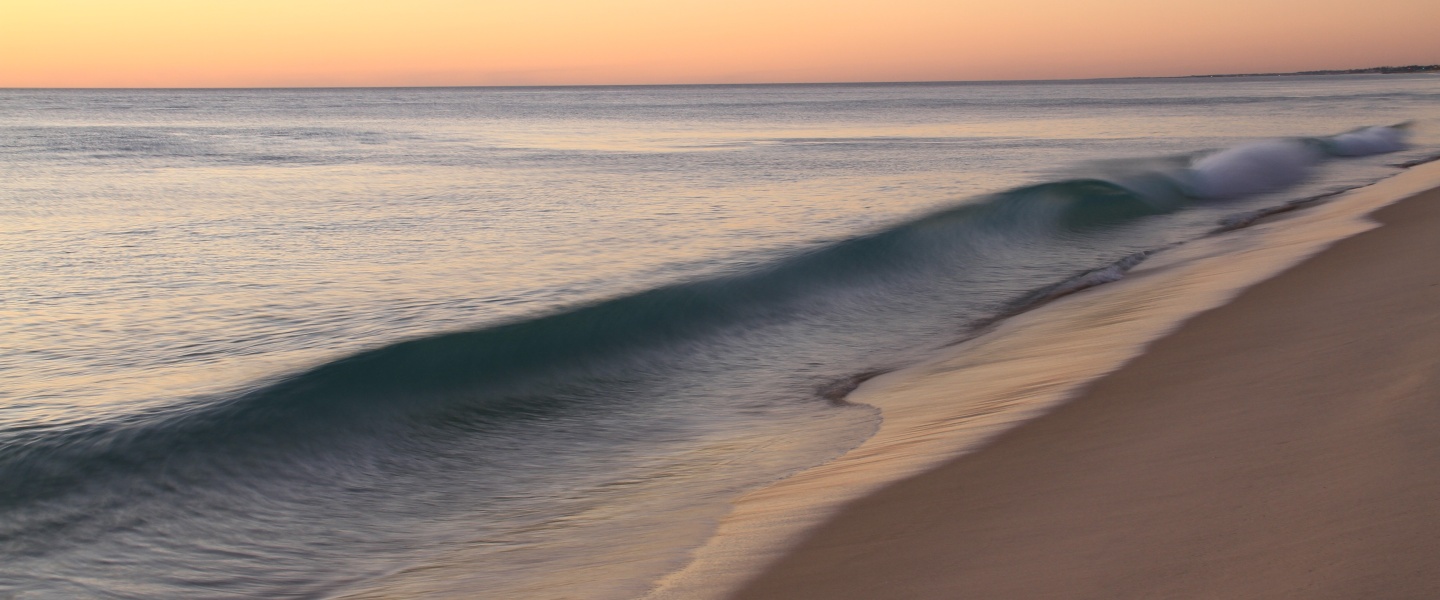
Stuck in the quicksand of feelings that are difficult to share.
I am stuck in a day.
The day we told our Dad that it was his time to fly. That he could shut his eyes and finally sleep forever.
Stuck on the day we let him free.
I couldn’t wipe his tears or hold his hand because I was stuck in a screen.
I held on to WhatsApp’s lime green square for two days, stuck in a vigil; stuck on the other side of the world.
I am stuck in a moment.
When he took his last breath and I took the call at 5am.
I was stuck in time when he was gone.
I laid on the couch, knees tucked in tight, my fingers and forehead clutching the image of my Dad’s lifeless body in a prayer – a pop-up reminded me that I had poor connection.
I thought my tears would short-circuit the silver battered iPhone, but it didn’t.
Life went on – for everybody else around me.
The leaves turned from yellow to red.
The squirrels dug up my bulbs that were meant to flower in spring.
People got busy.
Politics, Covid and climate change dance around as a backdrop – a funky screen saver.
And I? I’m still stuck with grief – gum stuck on the bottom of a kid’s shoe.
I am stuck wanting to hug. I am hug-less.
I am stuck wanting to share a ritual of departure. But I am illegal in my wanting. A petty criminal needing to heal a broken heart.
I am stuck wishing I can fly home, to hold my brother, honour my father, sob with my people and story-tell my father’s life so that I can undo the sadness and leave it between the sea and the mountains.
But I am stuck looking at his ashes in a box, through a box.
I am stuck in a place that I chose as my home and I am forever grateful. But it’s absent of my father’s story and of my ancestor’s history.
I am stuck with the tragi-comical catchphrase “I saw my Dad’s funeral on FaceTime”. Except that I am a clown and I can’t seem to make that funny.
I am stuck on the beginning of a path that I now walk without my father; orphaned without his words, his infinite pride for me and his big smile.
I am stuck searching in the wind, in piñatas and the sky for signs of him.
And he comes to me in dreams – Mi Papi, with his big fluffy white bunny slippers, blue pyjamas and a huge cup of tepid black coffee.
I am Daddy’s little girl. Feet stuck. Rooted to this adopted ground. Flightless. In a parallel universe. Trying to wave goodbye.
“Most people who were killed by a sniper died with a shot to their head or heart” she explained as we drove down sniper alley. Twenty-six -year-old Leijla, a proud Bosnian and a fiercely independent woman was our tour guide that day. In just five hours, she took us on an unforgettable journey through the history of Bosnia and Herzegovina. In her beaten up silver-soviet-era car, we travelled through the Ottoman and the Austro-Hungarian empires, sped through Sarajevo’s involvement in the First World War, explored Tito’s Yugoslavia, dove head first into the 1984 Winter Olympics and the city’s infamous siege of the 1990’s. You could ask her anything, and she would know the date, the place and every obscure detail.
The hills of Sarajevo
I looked over to the back seat where my daughters were bobbing around like buoys in water. I wondered what effect Leijla’s horrific details would have on them. My eyes met my husband’s and I silently inquired , “Do you think they’re alright?” My telepathic communication was interrupted by my four-year-old’s high-pitched voice, “I’m a fairy from Wonderland and my name is Tiffany” rapidly followed by my seven-year-old anxiously bursting out: “No! I want to be called Tiffany!” I was relieved to see that they were in their own world bickering as though they were in their bedroom back in Montreal. “And that building on your right was the hotel that hosted all the journalists during the war. It was the only building that was not totally destroyed”. Leijla’s words became waves of memories; I had watched the Yugoslav wars unfold before my eyes and invade my heart with an empathy I had never thought possible.
It was 1992 and I was fourteen years old; a teenager. A teenager who would get senselessly sick on cigarettes and booze, crushing on her brother’s best friend and writing bad heartbroken poetry. While I ate dinner on our scruffy white couch, nonchalantly watching the eight o’ clock news, which my father watched religiously, I saw those buildings being bombed. I saw images of kids my age dead on the ground. I gulped down every detail of what the journalists were saying from that exact yellow Holiday Inn hotel. I devoured the destruction and injustice of a faraway war from the comfort of my Spanish-colonial-style living room in Santiago, Chile.
The Siege of Sarajevo lasted throughout most of my teenage years and it captured me entirely. “One day I will go to Sarajevo” I promised myself. I anchored that commitment to my soul like a magnet to a fridge door. And there I was. I had dragged my husband and daughters with me after squeezing a visit to Bosnia into our Croatian holiday. It was 2019 and I wasforty-one years old.
“Mummy!, I have snot”, my youngest popped my bubble. Snot was dribbling down her nose and on to the unicorn of her light pink shirt. “Toma corazón, ¿Tienes sed?” I said as I handed her a lavender scented tissue from the front seat. “¿Hablas Español?” Leijla asked me in a perfect accent. I spoke to her in Spanish, and this powerfulwoman became extraordinary! “Oh my god, where are you from?” she asked. “I am Chilean, but was born in Honduras and raised in Ecuador, Colombia and Brazil, but my Mum is from Trinidad and Tobago”, I stopped, I realize how strange that all sounds to people. “Pero que increíble!” She spoke Spanish with an almost undetectable accent: like someone who had lived in Spain or Latin-America. I had never seen anyone so excited about my story and about wanting to share my language! Her jargon was spotless! “In what country did you learn your Spanish?” I asked. She laughed. “Bosnia, I have never left Bosnia. My first words were in Spanish because when I was a little I watched Kassandra!” she said matter-of-factly. I had watched Kassandra too! Soon the two of us were giggling away at the tacky storyline of the famous Venezuelan soap opera. Later I would discover that its gypsy story had been a huge hit in the Balkans. So much so, that during the conflict in Kosovo, the shootings and acts of ethnic cleansing were halted during its broadcast hours. When theactress who played Kassandra (Coraima Torres) visited Kosovo tens of thousands of Serbs and Albanian-Kosovars who were deadly enemies in battle, all gathered to meet her.
I imagined this little child as she watched TV during one of the most horrendous European wars, reveling in this cheesy telenovela. I once had been a little girl growing up in a conflict, Colombia’s brutal drug war, distracting my own fears with Latin-American soap operas. My childhood was a collage of “Kassandras” playing in between many moves, stories of unstable political times and my parents’ dysfunctional marriage. I imagined my own inner child extending her arms to meet the many Leijlas across the world via Spanish speaking soaps.
The Tunnel of Hope
“Quick! I think they might be closing” Leijla announced urgently as she parked the car. We had arrived there at exactly 4:30pm. The Tunnel of Hope was constructed during the Siege of Sarajevo in the midst of the Bosnian War. It was built by theBosnian army in order to link the city with the Bosnian-held territory on the other side of the Sarajevo airport. At that time, the city was entirely cut off by Serbian forces, but the other side of the Sarajevo Airport was under Bosnian control. The tunnel allowed food, war supplies, and humanitarian aid to come into the city, while also allowing people to get in and out. It became a major way of bypassing the international arms embargo and provided the city defenders with weaponry. Essentially the Tunnel of Hope saved Sarajevo’s residents from starvation and destruction.
We ran behind Leijla’s flowy blonde ponytail to the entrance of the tunnel. She defiantly tried the thick wooden door, which was already shut, and it creaked open. She smiled slyly, looked at us and with the a cock of her head invited us into the courtyard of the makeshift museum. My eldest daughter, who is a stickler for rules, was instantly stressed and said “Please Mummy, let’s go we shouldn’t be here”. It was important for me to visit this tunnel, and although I want my daughters to respect rules, I equally want them to understand when those rules can be defied. Nevertheless, the incident left her unprepared to see the images that she would encounter inside. The courtyard had a long line of profoundly evocative black-and-white photographs of a very deadly time. A video that depicted the shelling that happened in the city was played repeatedly in one of the rooms, like a horror film.
My daughter began to cry. I held her close and felt so guilty. The images were too much for her, and frankly they were too much for me. Images of destruction and of dead children were popping her bubble and accelerating her heart-rate. Leijla got down on one knee, caught my daughter’s gaze, held her hand and gently said, “Please don’t cry. It’s sad, but not everything was bad! Children played games and went to school, people fell in love, people got married and babies were born. I was born during the war! My Mummy walked through this tunnel to get me a dress that she really wanted me to have! It was white, frilly and wonderful. People survived, and defied the impossible!” my eldest daughter heard her words and calmed down. I felt overwhelmed and wanted to curl up in a ball and cry. Life, death and survival makes everything else seem so mundane and unnecessary. My daughters were learning that through destruction, there was birth and even during war there is hope. I want to protect them, shelter them, but I also need them to understand that this world is imperfect, filled with glory and contradictions. Is four and seven too young an age to pop their bubble and erode their innocence? And then, I thought of how by the age of five, growing up in Colombia, I had already learnt what to do if my parents were kidnapped, and how to duck fast under my desk if the school got bombed by the FARC.
Leijla walked us through what is left of the Tunnel of Hope, turning it into a joyous adventure. The rough, cramped but sturdy walls were a metaphor of their survival. My seven-year-old walked through it bravely sniffling back her tears and holding my hand tightly. My youngest navigated it all with the imagination of a four year old. “Doesn’t it bother you that we are somehow exploiting your suffering by us coming here?” I asked her, feeling troubled. “Not at all” She answered emphatically. “We need the world to know what happened to us”. Not an ounce of victimhood was in her voice as she said that, just an incredible amount of courage. I hoped, wished and prayed under my breath that nobody anywhere would have to endure something like that conflict ever again.
The Bobsleigh and Luge track
Rebirth. “Sarajevo was at the top of the world in 1984 when it hosted the Winter Olympics…” Leijla’s voice trailed off. Silence. She didn’t need to say much more. Just eight years after the Olympics, Sarajevo’s sky turned grey with bombs. Just eight years after hosting one of the most important sport events on earth, its hills were dotted with snipers and mines. Just eight years after building world-class stadia, ski hills and a bobsleigh and luge track every sport venue in the city would be bombed to pieces. Leijla’s tour that day would end at the top of the hills overlooking the city where the ruins of the famous track still valiantly stood. Hauntingly beautiful. We embraced Leijla goodbye. We hung on to each other not wanting to let go too soon. “Hasta luego querida”, I told her, “Vuelvan a Sarajevo pronto” she said to us with her Slavic charm and sincere friendship. “Me encantaría” I answered honestly. I now know what happens when my soul promises to go somewhere.
As we waved goodbye, her car slowly reduced to a spot far down the road, I noticed a chubby red gondola making its way up to the city’s look out point. Four tourists were gazing out of its darkened windows. The green lush hills that surround Sarajevo mesmerize and entice you. They are also perfectly unsafe. Millions of mines still lay on the ground ready to explode. Ironic. Mines in Bosnia have become a way for nature to keep itself pristine and untouched. Sarajevo looks quite small from above. Petite, stoic and reddish brown. Unpretentious, humble, defiant almost precocious, and proud. A mix of lavender, Turkish coffee, smog, brewing beer and the call for prayer came to fetch me from below. Hypnotized by the sounds I counted the Mosques, the Orthodox churches and the Synagogues of one of the most diverse cities on this planet. A merge of religions, worlds and cultures. “We mostly live in peace” Leijla had said as we passed one of the many mosques on our tour. “It’s the politicians who make us afraid and cause us to hate each other”. It would not be the first or last time I would hear that comment in Bosnia and Herzegovina and the rest of what once was Yugoslavia.
I looked around to see my husband and daughters on the cemented relic of the bobsleigh track. Just a week before we had been in Croatia visiting Roman ruins, now we were on modern day ones. “When I count to three we run and jump into the bobsled” My husbandwas coaching excitedly. I filmed them as they sped down. Wonderful giggles echoed through the half-pipes. My daughters spread their arms like wings and disappeared down the wave-like curves at full velocity. The entire track was swallowed by awe-inspiring graffiti and overgrown weeds. Life was overcoming the bombs, destruction was giving space to nature and art and Sarajevo was still learning how to exist with its story. The track had gone from being a glorious frozen competitive path for athletes, to an artillery position by Bosnian Serb forces, to a two kilometre installation of kaleidoscopic colours. Poetry and hope.
A warm breeze embraced me as my fingers traced the contours of a spray painted imitation of Klimt’s famous painting “The Kiss”. I remembered Leijla showing us the tombs of Sarajevo’s “Romeo and Juliet”. A Muslim Bosnian woman in love with a Bosnian Serb, both twenty-five years old, fatefully shot by a sniper as they tried to run away together. Maybe that kiss was for them? Maybe it was just a selfless piece of lovely graffiti. I did not detect a single angry piece of art on the tracks. Remembrance? Yes. Love? Yes. Grace? Absolutely. Revenge? Not at all. It isn’t only its past, but its otherworldly beauty that makes Bosnia so deeply affecting. I watched my family as the afternoon sun glowed on them. I dropped my thoughts, spread my wings and flew after them. We were safe, changed and grateful for our fragile freedom. Privileged to exist in peace. Rebirth.
On Saturday 30th of March 2019, I woke up at 4 am to pose naked for Spencer Tunick along with a little over a thousand other very naked people.
Why?
A lot of people asked me why on earth I would do this? Well, I admire Tunick’s work and how he manages to transform human bodies into jaw-dropping photographs. He is a controversial character and his work generates a lot of heated discussions such as if his photography is considered art or not. Or what is public and private, the tolerated and the forbidden, the moral and the immoral, the individual and the collective. It was also my third attempt to pose for him, and I finally made it happen.
In May 2001, Tunick had been in Montreal and either my alarm went off, or I pressed snooze at 4am and just rolled over, it’s not clear in my mind anymore, but I never made it and I regretted it after. Then, Spencer Tunick went to Santiago, Chile in June 2002, while I was also in Santiago waiting for my Canadian residency papers to come through. I decided to go with my friend Nelson. I picked him up at 4am and went to Santiago’s Fine Arts Museum at “Parque Forestal”. When we got there, there was complete chaos! 4000 people had answered his call and hundreds of Evangelicals and Catholics where there protesting the event and calling it offensive. A couple of people threw themselves at my feet saying “Hermana, no te saques la ropa” and begging me to reconsider. And thousands of people had already thrown off their clothes in the bitter cold and where running around everywhere not even paying attention to Mr Tunick’s instructions. Quite a lot of them where drunk, quite a lot of them where just plain merry to be freely naked, and quite a few chilean flags where wrapped across people’s bodies. People where singing the national anthem, and poor Spencer Tunick was standing on his ladder with his un-heard megaphone looking entirely baffled about what was happening around him. There were also police, who had the same facial expression that Mr Tunick had, bemused, confused, not sure how to proceed. I decided to be a spectator of what was happening in my country and left my clothes on. I couldn’t quite trust that no one would steal my clothes, and I preferred being a witness to the craziness around me. I can say it was quite unforgettable. The national newspaper said the following:
Tunick, idealmente quería fotografiar a un grupo de personas en un lugar urbano, pero la sorpresa fue que hubo una respuesta masiva. La instalación artística o manifestación social, desconcertó al sector sociológico en el país y de pasó derribó el mito de la inhibición en la sociedad chilena.
I had still not taken my clothes off. So when I saw that Spencer Tunick would be in Valencia I almost felt like I owed it to him!!! La tercera es la vencida, as they say in Chile!
Getting naked!
We were scheduled to meet at 5am at the Centro del Carmen in the old city. It was cold, 8 degrees. Not cold like in Montreal, or like many other places in the the world. But damn cold to be walking around naked as Spencer Tunick would share with us encouragingly.
When I walked there at 4:30 am, I could see how the entire section of the Torres de Serrano was all blocked off and cameras where being installed! Things were definitely happening! I arrived and there were hundreds of people lining up to sign the consent sheets. I wondered how many of them had just simply come after partying. Maybe a lot, but I was still surprised by the diversity of ages and backgrounds. There were more men then women though. And things were definitely smoother then the experience in Chile!
Women were taken to one side of the old building and men were taking their clothes off in another section. And at 6:30, as the sun was rising, we were asked to take our clothes off. The first few moments were a mix of excitement, adrenaline, cold and shyness. And then, when you are running bare feet and naked down a city road with a thousand others like you, you forget all of that! The shrieks of excitement are impossible to retain as you run down the road, even though you might be waking up the whole city! We walked 280 metres, which under normal circumstances is not a lot, but bare feet and naked, it feels like 1km!
Someone took an unauthorized photo from an apartment building.
It was an experience like no other to see the sunrise alongside 1000 bare bodies against the back drop of Valencia’s Torres de Serrano. But I was missing having gone with someone to share the experience with and to laugh off the fact that my feet where going numb with the cold!
Then Mr Tunick wanted every woman to pair up with a man. And, this was awkward. I paired up with an unknown, young french man. So, as Mr Tunick would ask, he laid down on the the very cold ground while I put my foot on his chest. It was a very pro-feminine statement. And, I wished Andy was there with me. But, I felt so bad for this body shaking underneath me for a good ten minutes, that I quickly forgot my shyness and went into empathy mode! We then had to hold hands. There I was, staring into some very blue eyes, of a stranger’s naked body for the love of art. The instructions were very clear, do not smile, just look neutral towards the horizon, and do not talk until Spencer said so. The silence that would occur during shots was beautiful, only broken by the clicking sounds of Spencer Tunick’s camera. Again, an experience soaked in feelings and emotions! We had all just become one. A statement frozen in time. We were all, just bodies in service of art.
Imagine 1000 people standing naked in front of this iconic building in Valencia!
And then, we moved to the other side of the Torres del Serrano, where again the crowd erupted in excited shrieks until we were asked to quiet down. We spent another twenty minutes taking a couple of shots, again, with quite a strong pro-feminine statement. And the men, were once again asked to be on the floor!
After the second photograph, the men where taken to another section of the old town while the women were taken under a beautiful heritage tree next to the Turia Park. Spencer was going to take one photograph just with the men, and then he would come and take one with us. It was absolute torture to wait under that tree for what seemed like hours, it was probably more like 45 minutes. But, it was impossible to abandon ship. Nobody wanted to be the only one to run, butt naked, through downtown for 5 minutes towards their clothes. So, we stuck it out. A few women were complaining, even swearing, and when Spencer finally arrived the Spanish women made it clear to him that they were not happy!
And then, Spencer made us lie down in front of the tree and point our arms up. It must have been incredible to see hundreds of women laying down in reverence to Mother Earth. I do think Spencer Tunick is an artistic genius. But it was cold and horrible on our backs! And I was so relieved when it was over!
It must have been incredible to see hundreds of women laying down in reverence to Mother Earth under this tree!
When I finally put my clothes on, it was almost a bizarre feeling to see how clothed we all are. My feet where numb and frozen, my body ached, I was exhausted, but I was so happy I had done it. And I would do it again! Gracias Spencer! Gracias Valencia!
So the “Fallas” have come and gone and the city is eerily quiet. Valencia’s feast of fire has imprinted itself on my family’s brain and heart for ever. This is a city of pyromaniacs! “Fallas” is by far one of the most diverse, interesting and all-encompassing festivities I have ever witnessed! The sights, smells and sounds were awe-inspiring, contagious and non-stop! The aromas of orange blossom, mixed with gun-powder, and fried oil from all the pop-up churro stands around the city, the music bands playing in every street corner mixed with the beautiful art work of the incredible statues and the vibrant silk dresses worn by the “Falleras” are a feast to the senses and an anthem of human creation! It is also an extremely un-environmentally friendly festivity! To their credit though, and incredibly, the day after Fallas you wake up to an almost impeccable city with barely any trace of the calamity, debris and craziness that went on for more than two weeks!
This mesmerizing Falla is at least 5 metres high!
In Valencia and its surrounding communities of towns and villages, artisans called “Artistas Falleros” spend all year building incredible monuments of cardboard-stone, cork, wood and horrible polystyrene (sadly so toxic!). Many of them political satires of what is currently happening in the world. I had the chance of going to one of the workshops last January to see them work and I can tell you that what they create with so much craft and dedication is astonishing! They are an incredible work of art, and some of them are massive, reaching some 9 metres high! These monuments called “Fallas” (and ninots which are smaller figurines) are put on every other couple of streets on March 15 (the day of the “plantà”). Each neighborhood has a big one and a small one (Falla infantil). On March 19 at night they are burned to the ground (the “cremà”). The work of a year completely burnt to nothing! Except for one that receives the winning prize and gets pardoned ending up as a museum piece in the Museo de las Fallas.
THE MAESTROS FALLEROS SPEND A WHOLE YEAR BUILDING THESE WORKS OF ART, AND THEY ARE ALL BURNT TO THE GROUND ON THE NIGHT OF THE 19TH, EXCEPT FOR ONE.
NOISE, BOMBETAS AND FIREWORKS!
But “Fallas” I soon learnt, was not just the burning of giant statues to celebrate Saint Joseph, the patron saint of carpenters and of Valencia. As of the 1st of March there is non-stop throwing of fireworks, firecrackers and anything that can make a loud “boom”. It was darn frightening at first, especially when some kids don’t even care about throwing a fire cracker at your feet (they think it’s hilarious). There are pop-up shops everywhere in the city selling fireworks and firecrackers of all sizes, shapes and colours, at all times, even during siesta time!
A Spanish-Canadian family who we befriended in the park a couple of months ago, decided to baptize Julianna and Beatrice in the art of throwing “Bombetas” (little tiny crackers that look like sweets). These two little Canadian girls who at first were so afraid of all the noises, quickly got the adrenaline rush of throwing explosives all over the park! Only in Valencia would you see a one-year child lighting a firework and throwing it! We saw some pretty frightening things, such as firecrackers thrown into empty garages, fireworks next to buildings and just over our terrace (and even heritage buildings such as the market), paellas cooked over bonfires in every street, and people throwing firecrackers at each other and laughing their heads off. But incredibly, I didn’t see many accidents! It seems that people are used to fire, they are not afraid of it so they know its limits. Their relationship with fire is one that I learnt to admire. The booms and bangs carried on all day and all night for the duration of the Fallas. It was relentless, and if you closed your eyes, sometimes you’d think you were in a war zone or next to an erupting volcano! You do get used to it though. You stop jumping every time there is a loud crack! And seeing constant fireworks from our terrace and bands playing at all hours was a real treat! Maybe Valencianos are calm most of the time because they get to spend 19 days going completely bananas!
For five days we walked approximately 10kms a day wandering about the city just looking at all the exuberant structures, enjoying hot buñuelos and churros con chocolate, throwing bombetas, following the “Pasacalles” with their fun bands and parades and just taking it all in. If you live in Valencia, it is impossible to stay home and not be part of it. It is so noisy and full of love, light and colours that it is an injection of energy. An incredible communal celebration of fire, noise, renewal, death and rebirth. So for those who don’t like noise and inhaling gun-powder it is an excuse to go as far away from Valencia as possible.
I actually got to see the artists making this Falla.
At night and at day the Fallas are stunning to look at!
NINOTS
A Ninot is a small figure and many ninots make up one big Falla. Every year, thousands are made and thousands are destroyed by fire, except for one. There is a ninot exhibition at the ultra-modern city of arts and sciences at the other end of the beautiful Turia Park. People are invited to see all the Ninots that have been made that year and vote for their favourite one. The one with most votes, gets pardoned. Each Ninot, belongs to a Falla and they return to their place the Friday before everything gets burned down. We saw this exhibit and were really blown away by the idea that they would all disappear soon. Most of them are political satires and are very cartoony, but a few of them stole our hearts for their uniqueness and their capacity to make a deep and strong statement. Like one, which was a statue of a man and a child, wrapped up in newspaper which symbolized the many lives lost in the Mediterranean sea. This black and white statue made its mark on us surrounded by all the colour; it truly gripped our minds.
NO WORDS!A NINOT MADE OUT OF RECYCLED MATERIALS DEPICTING THE POLLUTION IN THE OCEAN
MASCLETÀ
Another incredible event during the Fallas is the “Mascletà”. From the 1st to the 19th of March there is a Mascletà at 2pm every day in the city’s main square that lasts about 5 minutes. They basically launch 125 kilos of gun powder into the sky; the booms and bangs that reach every corner of the city are a blast to the soul! The first time we went to one, we went with my childhood friend Nelson who taught us that we needed to keep our mouths open to avoid any injuries to your inner ear, and I am glad I knew that. Again, I am not one for noise, but being there in a massive crowd while they euphorically bombed the air with rhythmical crackers that only get louder and louder, pounding your soul and the earth below you, is something you don’t get to live every day. The entire downtown comes to a halt silenced by the deafening noise. The sky goes dark, and with the in crescendo sounds of the last powerful bangs, people go wild. And then; they all go out for lunch!
The weekend before the burning of the Fallas, there are Mascletàs and fireworks in almost every neighborhood. There is also the “Despertà”, which is a Mascletà at 8am in the morning meant to wake everybody up so they continue the party. I did not appreciate this on a Sunday morning!!! We then realized that the real Falleros stay up until the “Despertà”, have breakfast and then go to bed!
A mascletà in the Plaza del Ayuntamiento
SCHOOL MASCLETÀ
The Girl’s school (and I think every school in Valencia) also celebrated their own Falla and Mascletà, which was an unforgettable experience for them. All the kids were dressed with the traditional Falla shirts (blusones) and blue and white scarves. They had to make a Ninot out of recycled materials and then the teachers organized a “Pasacalle”, a parade around the nearby streets followed by a band and a Fallera mayor (one of the teacher’s had dressed up in a typical Falla outfit made of silk). Beatrice was the flag bearer for her class and she took her job very seriously! When they got back to the school yard, they put all the Ninots on a large table and turned it into a Falla. Then with instruments, also made out of recycled materials, the teachers got the parents and kids to make lots and lots of noise followed by the popping of balloons to evoke a Mascletà. They then sang Valencia’s national anthem (because that is what they do after every single event, be it a mascletà, the burning or a street parade), and I have to say, I had tears in my eyes it was so lovely. Valencianos are so proud of their Fallas! Then the band played for an hour and everybody danced until they dropped! I might never want to leave this city again!
NINOTS MADE BY THE KIDS AT SCHOOL
Falleras and the Ofrendà
Falleras
The Ofrendà (Flower Offering) is one of the most well-known acts of the Fallas. For two days, thousands of falleros and falleras from Valencia and the surrounding towns and villages go to the Plaza de la Virgen to offer their tribute of flowers to the “Virgen de los Desamparados”. From four in the afternoon and probably until two in the morning, on March 17 and 18, the Falleras and Falleros followed by their music bands and flag bearers, walk towards an enormous wooden reproduction of the Virgin located in front of the Basilica and offer a beautiful bouquet of white flowers. Men are waiting on the structure hanging off dangerously with one hand and adding flowers with the other so they can drape her in the most magnificent robe of white and red carnations. The choreography of flowers been rhythmically thrown high up in the air to reach the hands of these very skilled artist was a glorious labour of love. It is a feast for the eyes to see the procession of Falleras and Falleros walk by, for the costumes are each and every one of them a hand-made gorgeous work of pure art. They are made of silk and lace; Ivory with scarlet, bright pink with deep purples, lavender with turquoise and penetrating oranges and every colour you can imagine. Every single one of them is simply stunning. The men’s outfits are equally beautiful and smart. So when you see thousands of them parading down the streets with flowers and with delicate veils you understand their emotion. Many Falleras weep as they leave the flowers because it is such a mystical moment for them. The whole image is a precious live painting streaming before you incessantly.
HUNDREDS OF GIRLS, WOMEN, BOYS AND MEN WALK TO THE VIRGIN TO LEAVE HER FLOWERSJUST THROUGH THE ARCHWAY THE VIRGIN APPEARS, AND IT IS AN EMOTIONAL SIGHT FOR THE FALLERAS AFTER A LONG PROCESSION.
THE VIRGIN BEFORE THE OFFERING OF FLOWERS
The following day we took the girls
to see the Virgin. What an intoxicatingly beautiful sight it was to see the Virgin
and the entire plaza just covered in flowers! Oh what a beautiful ritual that
celebrates spring and femininity!!!
THE VIRGIN DRAPED IN FLOWERS
THE FALLERA MAYOR LIVES IN OUR BUILDING
For a couple of days we wondered why a band would walk half way up our very busy road, stop (interfering with the traffic), throw precarious and terrifying firecrackers at our door and then march away again. Twice a day. It was a mystery. Until we figured it out one morning when we were just about to leave our building to go and explore and we saw a beautiful Fallera standing in the lobby and the band playing outside. This, we learnt that morning, was the traditional way in which the Falleros come and pick up their Fallera Mayor (the equivalent of a Festival Queen) so that they can initiate the days festivities. Every Casal, a community centre in every neighborhood that organizes each Falla, has an Adult Fallera Mayor and a Child Fallera Mayor . And the Adult Fallera Mayor of our neighborhood happened to live in our building! The girls were so excited by that! Now we knew to run down, or just look down the balcony, to watch the wonderful procession every time it happened. This was probably one of the most exciting things about our day. Fallas was filling my heart with the amount of processions, traditions, music and celebratory art!
Cremà
The cremà (the burning or cremation in Valenciano), was a really well organized event, even though it could sometimes come across as chaotic. The small Fallas are burnt around 10pm and the big ones at midnight (or whenever the firemen can arrive). Firemen are present for the burning down of the big Fallas standing close by with their hoses. They have a big role that night and their presence is reassuring. Every Falla has more or less the same ritual: The firemen declare that it’s safe to burn the Falla; then the “Señor Pirotecnico” douses the figure with kerosene and then wraps the statue with explosives and fire crackers and he hands the fuse to the Fallera Mayor. Beautiful fireworks blast into the night sky announcing that the ritual has begun (I have never seen fireworks at such a close range before, it was cascading just above our heads!). The rain gently begins, as it always does during Fallas, which is quite incredible because rain is quite rare in this city! Then the Fallera Mayor lights it, the fire spreads through the cord, there is an almighty CRACK and BOOM…and the Falla goes up in flames while Valencianos weep, cheer and sing their national anthem. Witnessing this ritual is a life changing experience. The noise, the celebration of fire and spring rain, the proud singing, the weeping, it is all stitched into your soul like the beautiful patterns on a Fallera’s dress. The cremà is moving and deeply rooted in myth and ancient traditions. They get to burn what they don’t need and start over the next day with new ideas and a new beginning. It’s quite something. It is a lesson on letting go, of just letting beauty burn so you can create more beauty. Part of me does acknowledge the waste, I hope one day they can use more environmentally friendly materials, but the lesson on letting go was not lost.
CREMATING THE STATUEFIREWORKS JUST ABOVE OUR HEADS!
THE END OF FALLAS
And now, Valencia has gone quiet again, part of me feels relieved, I did have a headache from all the noise and the toxicity of the air, but part of me really misses the joyous ecstasy of the whole celebration. The days following the Fallas were a blur, everybody seemed exhausted and drained. I admit to feeling deep sadness, as though I had witnessed something truly mind blowing and now it had all gone up in flames. I understood why so many people weep at the end of it. There is definitely a mourning period that follows the festivity. The extreme exhaustion is due to many sleep-deprived nights and high energy days. But like ants, everyone now is busy in the “Casal Fallero” and the workshops making designs for next year. They will choose a new president and a new Fallera Mayor, start their funding campaigns and everything will begin all over again. So now, we go back to having a quiet city with blossoming colourful trees and beautiful beaches. The days are longer and warmer and spring is finally here.
I am a multinational – Immigrant to Canada – Mother, Clown, Activist, Actress, Artistic Director of Le Trunk Collectif Theatre Company and writer in denial.
Thanks for joining me! This blog is about my journey as a nomad, mother, clown and artist. I will be writing about my travels, my art, my poetry and my thoughts on the world. Enjoy!
Good company in a journey makes the way seem shorter. — Izaak Walton